Losing most or all of your teeth is one of those things that quietly reshapes daily life, from what you can eat to how often you smile in photos. Full mouth dental implants are built to reverse that, replacing a failing or missing set of teeth with a permanent, fixed restoration rather than another removable device to manage. This guide walks through exactly how the treatment works, what it costs, and what happens at every stage from consultation to final result.
What Are Full Mouth Dental Implants?
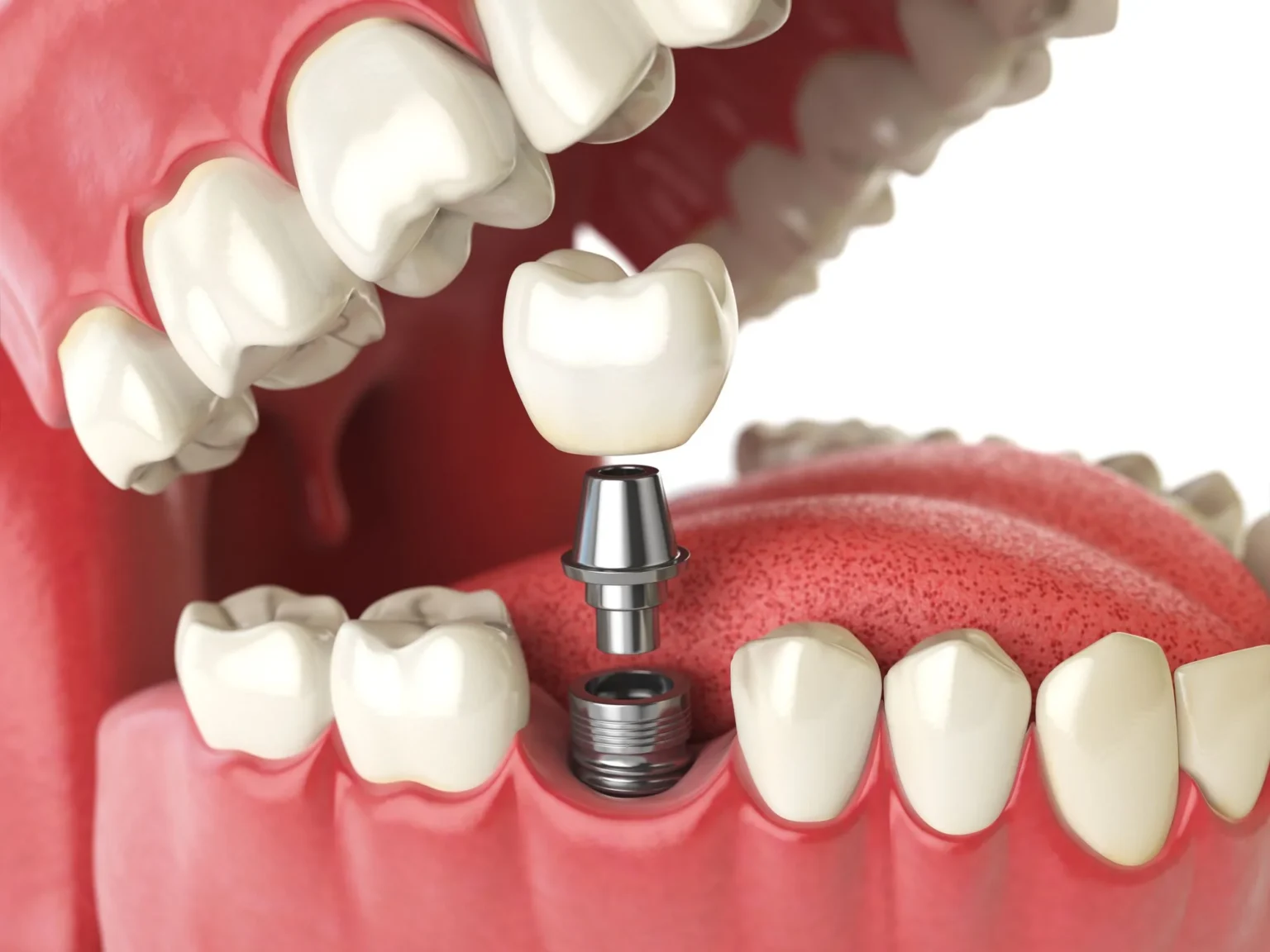
Full mouth dental implants replace an entire arch, or both arches, of missing or badly damaged teeth with a fixed set of replacement teeth anchored directly into the jawbone. Instead of resting on the gums the way a denture does, the new arch is secured to implant posts, which is what allows full teeth implants to function closer to natural teeth than any removable option ever could.
The terminology gets confusing fast, mostly because so many people are searching for the same treatment under different names. Whole mouth dental implants, full arch restoration, and full mouth dental implants all describe the identical procedure. What changes is the specific configuration, meaning how many implants are placed and whether the final arch is fixed or removable, which is exactly what the rest of this guide breaks down.
Who May Need Full Mouth Dental Implants?
This treatment tends to come up for a specific set of people, not everyone missing a tooth or two. Patients researching dental implants for full mouth restoration are usually dealing with one of a few situations: most or all of their natural teeth are gone, remaining teeth are failing from decay or gum disease faster than they can be treated one at a time, or a lifetime of dentures has finally become more frustrating than functional.
Long-time denture wearers are one of the largest groups who move to full mouth implants, often after years of relines, slipping, and diet restrictions that never fully went away. Seniors make up another significant share, since bone and gum changes over time often affect several teeth at once rather than just one.
If age-related bone density is a concern, a provider who regularly treats dental implants for seniors can evaluate what’s realistic for your case.
Full Mouth Dental Implants vs Dentures vs Bridges
Three options usually come up when someone starts researching full mouth teeth implants, and each solves a different problem.
Traditional dentures sit on top of the gums, held in place by suction or adhesive. They’re the least expensive option to start, but they shift while chewing, need periodic refitting as the jawbone changes shape, and don’t stop bone loss since there’s nothing anchoring them into the bone itself.
A dental bridge replaces a small number of missing teeth by anchoring a false tooth to the healthy teeth on either side. That works fine for a gap of one or two teeth, but it isn’t a realistic option once most of an arch is missing, since there aren’t enough healthy teeth left to anchor it to, and grinding down what little remains just to support a bridge often does more harm than good.
Full mouth dental implants solve both limitations at once. Because implant posts fuse directly into the jawbone, they preserve bone density instead of accelerating its loss. Because the final restoration is fixed rather than resting on the gums, there’s no slipping and no daily removal. The tradeoff is a longer treatment timeline and a higher upfront cost than dentures, which is where financing typically enters the conversation.
Types of Full Mouth Dental Implant Solutions
Not every full-arch case calls for the same approach. The right one depends on bone density, how many teeth remain, and what a patient wants day to day.
The complete version of this treatment: a fixed, implant-anchored arch on the upper jaw, the lower jaw, or both, restoring a full bite. Explore full mouth dental implants as a standalone treatment path.
Four implants per arch support a complete fixed bridge, which generally means fewer surgical sites and a shorter recovery window. All-on-4 dental implants are often recommended for patients who want a fixed result without maximum implant placement.
Two additional implants per arch compared to All-on-4, which adds stability for patients whose bone density or bite force calls for more support. All-on-6 dental implants are frequently chosen for lower-arch cases, where bite force tends to be higher.
Implant placement and a temporary fixed arch happen in the same visit, so patients leave with functional teeth rather than a gap while healing takes place. Same-day protocols aren’t right for every case, and a provider offering same-day dental implants will confirm eligibility during imaging.
Types of Full Mouth Dental Implant Solutions
For patients who want more stability than a traditional plate without a fully fixed arch, full mouth denture implants snap securely onto a small number of implants and are still removable for cleaning. This option is sometimes called full denture implants or full implant dentures depending on the clinic, and it sits between traditional dentures and a permanent fixed arch in both cost and daily routine.
How Much Do Full Mouth Dental Implants Cost?
Pricing for dental implants full mouth treatment varies more than almost any other dental procedure, largely because most clinics don’t disclose real numbers until a patient is already sitting in the consultation chair. Quotes for the same procedure can range anywhere from $8,000 to $40,000 depending on the practice, which makes comparison genuinely difficult without a starting benchmark.
Through the OIC network, single arch treatment, whether upper or lower, starts at $12,500, or roughly $157 a month with approved financing. That compares to a national average of $18,000 to $25,000 for the same single-arch procedure outside a negotiated network.
Full mouth treatment covering both arches starts at $25,000 through OIC, or around $307 a month with financing. National averages for both-arch treatment typically run $35,000 to $50,000, which is where OIC’s pre-negotiated pricing creates the largest gap between network and non-network rates.
What Affects the Cost?
A few specific factors move the price up or down from the starting rate.
- Bone grafting adds cost when a patient doesn’t have enough jawbone density to support implants right away.
- The number of implants matters too, since All-on-6 uses two more implants per arch than All-on-4, and some cases call for even more depending on anatomy.
- Upper and lower arch placement can also differ slightly in complexity, which a specialist accounts for once imaging confirms the full picture for dental implants entire mouth treatment.
What Does the Full Mouth Dental Implant Procedure Involve?
Treatment moves through several distinct stages, each building on the one before it.
- Consultation and 3D imaging maps bone density and confirms exactly where each implant will go
- Extractions remove any remaining teeth that can’t be saved, often during the same visit as implant placement
- Implant placement sets four to six titanium posts per arch directly into the jawbone
- A temporary fixed arch is often attached the same day, so the patient isn’t left without functional mouth dental implants while healing takes place
- Healing and osseointegration give the bone time to fuse fully around each post before it can support the final restoration
- The final zirconia arch replaces the temporary one once healing is confirmed, custom shaped and shaded to match the patient’s face
The result is a full set of teeth implants built to function and look like a natural, healthy smile rather than an obvious prosthetic.
How Long Does Full Mouth Implant Treatment Take?
Most full mouth implant cases run four to nine months from the first consultation to the final arch, though the exact timeline depends heavily on individual bone health.
- Consultation and imaging: typically completed within one to two weeks
- Implant placement: usually a single appointment
- Osseointegration: three to six months for the jawbone to fuse around each implant, and this stage can’t be rushed regardless of how healing looks on the surface
- Bone grafting, if needed: adds another three to six months before implants can even be placed, since the graft itself needs time to integrate
- Final arch delivery: typically fitted within two to four weeks once healing is confirmed
Patients without grafting needs tend to land at the shorter end of the four-to-nine-month range.
Are You a Candidate for Full Mouth Dental Implants?
Most adults missing several or all of their teeth in one arch are reasonable candidates, though the only way to confirm it is through a clinical exam, not an online checklist. Bone volume is the single biggest factor. If there isn’t enough jawbone remaining to anchor implants securely, a graft can usually build up what’s needed, which adds time but rarely rules out treatment altogether.
A few other factors come up during most consultations:
- Uncontrolled diabetes or active gum disease can delay the start of treatment until they’re managed, though neither is an automatic disqualifier
- Smoking slows healing and can affect how well implants fuse with bone, worth discussing openly during a consultation
- Medications affecting bone density or blood clotting rarely stop treatment but can change how a provider sequences it
- Age isn’t a barrier on its own. Plenty of the strongest candidates for entire mouth implants are patients in their sixties and seventies who are simply done managing a denture
What Are Full Mouth Dental Implants Made Of?
Material choice affects how a restoration looks, feels, and holds up over decades of daily use.
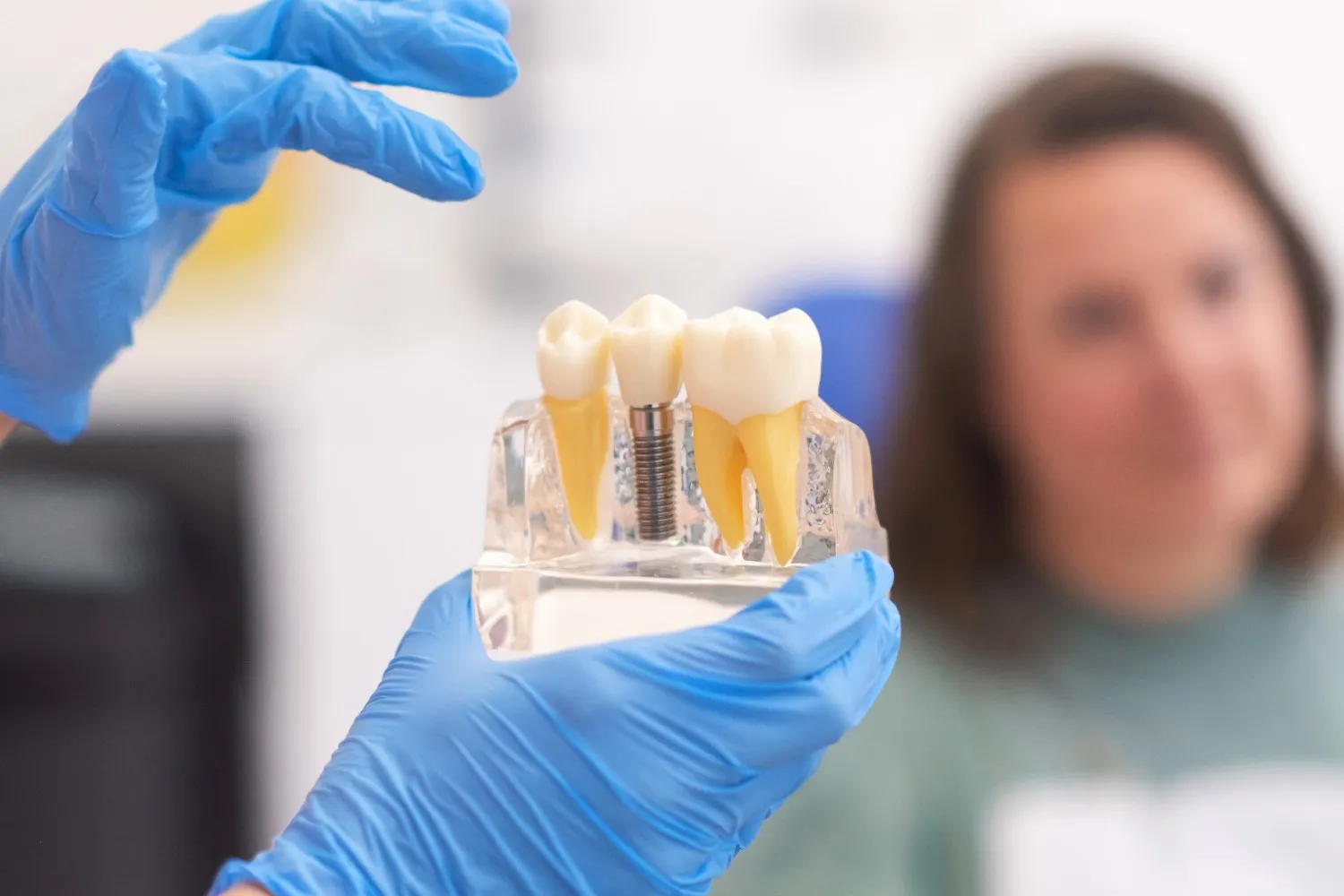
- Implant posts: titanium or a titanium alloy, chosen because bone fuses naturally to that surface during healing, which is what gives a whole mouth dental implant its long-term strength
- Abutment: the small connector piece between the implant post and the visible teeth, typically titanium or zirconia depending on the case
- Final arch: almost always 100% zirconia, a dense ceramic that resists staining and chipping far better than acrylic or older denture materials
- Temporary arch: reinforced acrylic, durable enough for daily use during healing but not intended as the permanent solution
What Are Full Mouth Dental Implants Like After Treatment?
Recovery unfolds gradually, with most of the adjustments happening in the first few weeks.
- Right after placement: some swelling and mild discomfort for a few days, similar to any oral surgery, and manageable with prescribed medication
- Eating: starts soft, think broths and mashed foods, and gradually expands as surgical sites heal over the first couple of weeks
- Speech: can feel slightly different for a short adjustment period right after a temporary arch is placed, as the tongue and lips adapt, typically resolving within days to a couple of weeks
- Once the final restoration is in place: permanent full mouth dental implants function very close to natural teeth for both eating and speaking, with most patients back to a completely normal diet once healing is fully confirmed
How Do You Care for Full Mouth Dental Implants?
Long-term maintenance looks a lot more like caring for natural teeth than managing a denture.
- Brush twice daily and floss or use a water flosser around the implant posts to keep surrounding tissue healthy
- Attend check-ups every six months so a provider can catch any issues with the restoration or gum tissue early
- No adhesive reapplication, no nightly removal and soaking, no periodic relining as the jawbone shifts, which is the maintenance routine that comes with full dentures implants and disappears entirely with a fixed arch
- Expect decades of use with consistent care, well beyond the five-to-eight-year lifespan typical of traditional dentures before they need replacing
Patients who transition from decades of removable dentures often say this shift is the change they notice most, simply because there’s nothing left to take out or manage before bed.
Full Mouth Dental Implant Financing
Cost is often the single biggest hesitation with this treatment, which is why financing exists as a separate conversation from the price itself. Three lending partners cover most patient needs:
A healthcare credit card accepted almost everywhere, with 6, 12, 18, or 24-month interest-free promotional periods for qualified applicants.
Built specifically for larger dental cases, offering loans up to $75,000 with longer repayment terms for patients who want a lower monthly payment.
A quicker, fully digital application process with 0% APR options for patients who’d rather skip paperwork and get an answer fast.
Pre-qualification through any of these partners does not affect a credit score, and final terms depend on individual credit profiles. Full details on rates, terms, and how to apply are available on OIC’s dental implant financing page, and a provider can walk through specific numbers once a treatment plan is confirmed.
Ready to Get Your Dental Implant Treatment?
Schedule a free consultation and get matched with an OIC-certified specialist who can confirm your options, timeline, and pricing.
Frequently Asked Questions
What are full mouth dental implants?
Full mouth dental implants are a fixed treatment that replaces every tooth in an arch, or both arches, using implant posts anchored in the jawbone and topped with a custom-built prosthetic arch. Unlike removable dentures, the result stays in place permanently and functions much closer to natural teeth.
How do full mouth dental implants work?
Implant posts are placed into the jawbone and left to heal for three to six months while the bone fuses around them, a process called osseointegration. Once healing is confirmed, a permanent zirconia arch is attached on top to complete the restoration.
What do full mouth dental implants look like?
The final arch is shaped and shaded to match a patient’s jaw structure and facial proportions, so the result looks like a full, healthy set of teeth rather than an obvious prosthetic. Most patients say the difference from natural teeth is hard to spot once healing is complete.
What are full mouth dental implants made of?
Dental implants replace missing or severely damaged teeth but do not straigThe implant posts are titanium or a titanium alloy, chosen because bone fuses naturally to the material. The visible arch on top is typically built from 100% zirconia, which holds up to daily biting force while resisting stains and chipping. hten surrounding natural teeth. Orthodontic treatment is generally used to correct crooked or misaligned teeth.
Are full mouth dental implants removable?
No. Full mouth dental implants are fixed in place and only removed by a dental professional. This is the main difference from an implant-retained denture, which snaps onto implants but can still be taken out by the patient for cleaning.
What types of dental implants are used for full mouth restoration?
Full mouth treatment typically uses four to eight titanium implants per arch, depending on bone density and bite force. Options include All-on-4, All-on-6, and same-day protocols, and a provider recommends the right count based on the specific case.
Can you get a full mouth of dental implants if you have few or no natural teeth left?
Yes. Full mouth implants are built specifically for patients missing most or all of their teeth in one or both arches. Candidacy mainly comes down to jawbone density, which a provider confirms through imaging during a consultation.
Are full mouth dental implants worth it?
For patients missing most or all of their teeth, implants offer a fixed, long-lasting alternative to dentures that preserves jawbone and restores near-natural chewing strength. Many patients find the upfront cost pays off over years of avoiding relines, adhesives, and denture replacements.
How much does a full mouth dental implant cost?
Through the OIC network, full mouth treatment starts at $25,000 for both arches, compared to a national average of $35,000 to $50,000 outside the network. Single arch treatment starts at $12,500, with financing available from around $157 to $307 a month for qualified applicants.
Is financing available for full mouth dental implants?
Yes. Patients placed through OIC can access financing through CareCredit, Proceed Finance, and Cherry, with 0% APR options available for qualified applicants. A matched provider walks through the specific terms once a treatment plan is confirmed.