Dental implant pricing is one of the most confusing parts of the entire decision. Two people can call five clinics and get five different numbers for what sounds like the same treatment. This guide breaks down real costs for every implant type. Get your real cost estimate whenever you’re ready to skip the guesswork.
How Much Do Dental Implants Cost?
The honest answer to how much does full mouth dental implants cost depends entirely on how many teeth you’re replacing.
- Single tooth implant: $2,000 to $6,000 nationally, including the post, abutment, and crown
- Implant-supported bridge: $10,000 to $16,000 for a few adjacent missing teeth
- Full arch treatment: the largest category, covering All-on-4, All-on-6, and full mouth restoration, broken down in its own section below
Most patients researching this topic are really trying to answer one of two different questions: the cost of fixing a single problem tooth, or the cost of replacing most or all of their teeth. The two numbers aren’t remotely close, which is exactly why this guide treats them as separate sections rather than one blended range.
Cost of a Single Tooth Implant
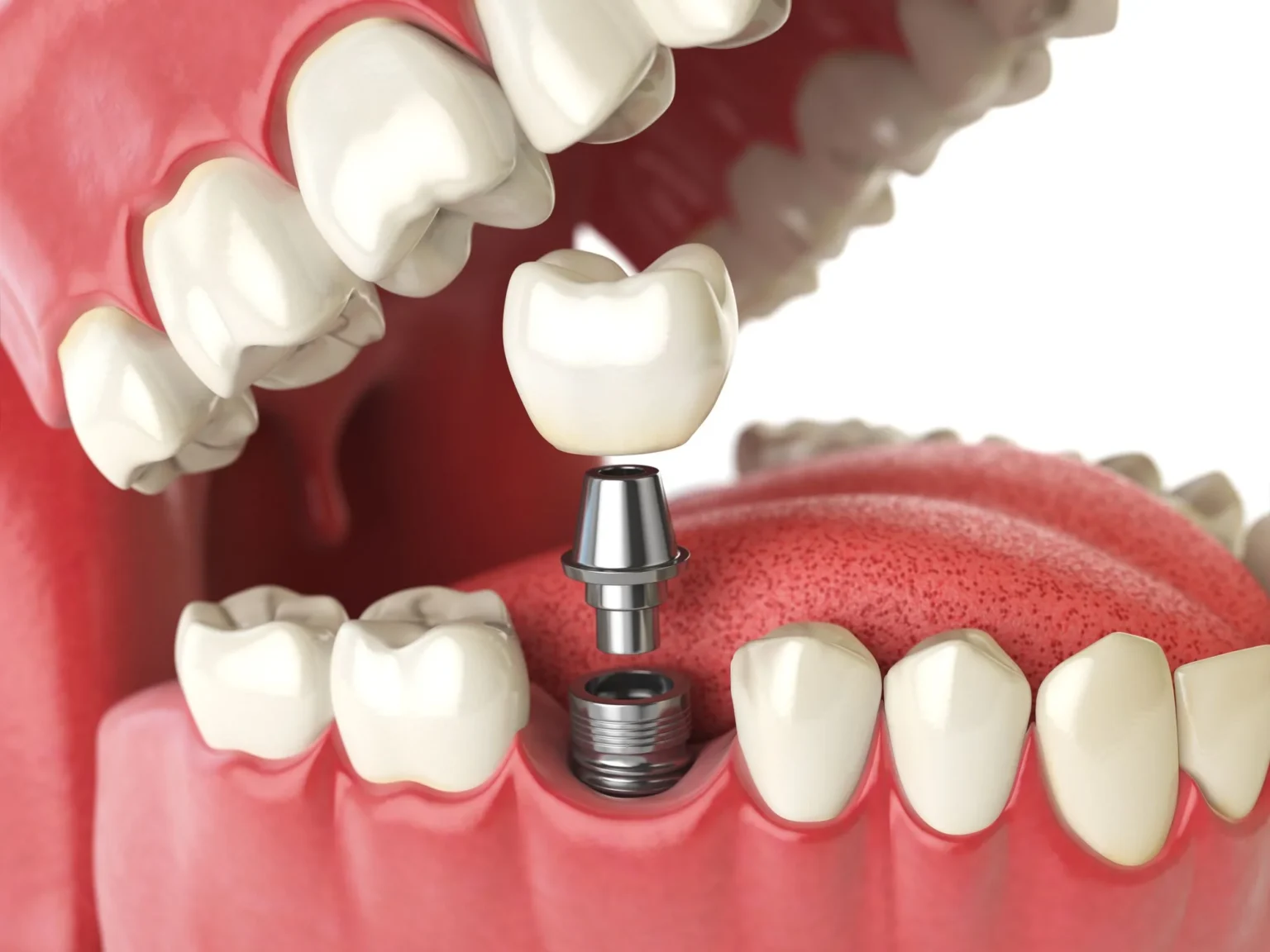
A single tooth implant is usually the entry point for anyone researching cost of an implant tooth, since it’s the smallest and most common implant procedure. It’s also the case most patients can research and understand quickly, since a single missing tooth doesn’t carry the same number of variables as a full-arch case.
The factors that move the price are still worth knowing, since they apply just as much to a single implant as they do to a full arch, just at a smaller scale.
- Titanium posts: the standard choice, sitting at the lower end of the price range
- Ceramic alternatives: cost more, chosen less often but preferred by some patients for material reasons
- Bone grafting: needed if the site has lost density since the tooth went missing, adding to the total
- Extractions: billed separately from the implant if a damaged tooth needs to come out first
- Location: implants in larger metro areas typically run higher than the same procedure in smaller markets
Patients researching cost of implant dental treatment for multiple teeth often find that once three or four teeth in the same arch need replacing, a full-arch solution like All-on-4 becomes more cost-effective per tooth than treating each one individually. Teeth implants cost the most when handled one at a time over several separate procedures, since every additional implant carries its own imaging, anesthesia, and healing period.
All-on-4 vs All-on-6 vs Traditional Dentures
Three options tend to come up once someone starts comparing full-arch treatments, and each fits a different situation.
- Traditional dentures: rest on the gums, held by suction or adhesive. Lowest upfront cost, but they shift while chewing and don’t stop ongoing bone loss
- All-on-4 dental implants: four implants per arch support a fixed bridge, using fewer surgical sites and often a shorter recovery than higher implant counts
- All-on-6 dental implants: two more implants per arch than All-on-4, adding stability for patients with higher bite force or more bone density to work with
An all on 4 bridge and an All-on-6 bridge look nearly identical once finished. The real difference is what’s holding it in place underneath, and that’s a call your provider makes based on imaging, not preference alone. It’s also worth noting that all on 4 dentures is a common but inaccurate way to describe this treatment, since the finished result is fixed in place and never removed by the patient the way a denture is.
Long-Term Cost: Implants vs Dentures vs Bridges
A denture that gets relined every few years and fully replaced once a decade can, over twenty years, approach the cost of an implant that was never replaced at all, without ever delivering the same daily stability.
Bridges sit in a similar position: a healthy bridge lasting twelve years and needing replacement afterward, sometimes twice over a patient’s lifetime, can end up costing close to what a single implant-supported restoration would have cost once.
Sticker price only tells part of the story. Looking at cost over a decade or more changes the comparison considerably.
- Traditional dentures: lowest upfront cost, but typically need relining or replacing every five to eight years, adding recurring expense indefinitely
- Dental bridges: mid-range upfront cost, but usually need replacement every ten to fifteen years and can stress the healthy teeth anchoring them
- Dental implants: highest upfront cost, but built to last decades with routine care, often making them the lower total cost option over a lifetime
This is part of why so many long-time denture wearers eventually switch. Patients weighing same-day dental implants against a slower traditional timeline find this long-term comparison holds regardless of placement approach.
Cost of Full Mouth Dental Implants
Full mouth dental implants cost significantly more than a single tooth, since the treatment anchors an entire arch of teeth to multiple implants rather than one implant per gap. This is the section that carries the real numbers referenced throughout the rest of this guide, so it’s worth reading closely if you skipped straight here.
Through OIC’s network, single arch treatment starts at $12,500, or around $157 a month with approved financing. Outside a negotiated network, the same single-arch procedure commonly runs $18,000 to $25,000, putting OIC’s rate roughly $5,500 to $12,500 below the national range.
Treating both arches, sometimes searched as dental implants cost full mouth or whole mouth dental implants cost, starts at $25,000 through OIC, or roughly $307 a month with financing. National averages for the same both-arch treatment typically land between $35,000 and $50,000, a gap of roughly $10,000 to $25,000. Full details on what’s included at each price point are available on OIC’s pricing page.
Cost of All-on-4 and All-on-6 Dental Implants
All-on-4 and All-on-6 are both full-arch techniques, and through OIC’s network, neither carries a separate price tier from the other. The difference isn’t cost, it’s implant count. All-on-6 places two additional implants per arch for patients whose bone density or bite force calls for extra support, a clinical decision made during consultation rather than a pricing decision.
Patients specifically comparing All-on-4 against All-on-6 rarely need to budget differently between the two, since the starting rate above covers either configuration once a provider confirms which one fits.
Some patients also research full mouth dental implants as if it were a separate pricing category from All-on-4 or All-on-6. In practice, full mouth treatment is the umbrella term, and All-on-4 or All-on-6 are the specific techniques used to deliver it.
A patient asking for a “full mouth” quote and an “All-on-4” quote for the same case should get the same number back, not two different starting points, and a provider who quotes them differently is worth questioning directly about why.
Cost of Implant Dentures
Implant dentures cost less than a fully fixed arch in most markets, since the restoration snaps onto a smaller number of implants and remains removable for cleaning rather than requiring the precision of a permanently fixed bridge. Nationally, implant-retained dentures typically fall somewhere between traditional dentures and a fully fixed full-arch case.
Where a specific case lands in that range depends less on the removable-versus-fixed decision itself and more on the same underlying factors that affect every implant procedure.
- Number of anchoring implants: fewer implants generally mean a lower starting cost than a fully fixed arch
- Final restoration material: the removable denture piece itself is priced separately from the implants underneath
- Grafting needs: the same bone density requirements apply as with any other implant-supported restoration
This is one option worth confirming directly during a consultation, since implant-retained dentures can vary in cost more than other full-arch treatments depending on the specific system a provider uses.
What Affects the Cost of Dental Implants?
The starting rate for any implant procedure is just that, a starting point. A handful of specific factors determine the actual cost of implants in any individual case.
- Number of implants needed: a single tooth needs one implant, while a full arch typically needs four to eight
- Bone grafting: required when there isn’t enough jawbone density to anchor implants securely
- Extractions: removing remaining damaged teeth before placement is usually part of the treatment plan
- Material choice: titanium implants and zirconia final restorations sit at different price points than acrylic alternatives
- Provider technology: 3D imaging, guided surgery, and same-day protocols can affect pricing depending on the practice
Two patients with the same missing teeth can walk away with different treatment plans and different costs, since bone density and health history are individual, even when the starting complaint looks identical on paper.
Why Dental Implant Quotes Vary So Widely?
It’s common for the exact same procedure to come back with wildly different quotes from different providers, sometimes ranging from $8,000 to $40,000 for full-arch treatment depending on where you ask. Most of that gap has nothing to do with quality. Geography, clinic overhead, and marketing spend all factor into a quoted price without changing the care delivered.
What varies most between clinics is what’s bundled into the headline number versus billed separately later:
- Included in most quotes: implant placement, the temporary bridge, and the final restoration
- Often billed separately: imaging, extractions, sedation, and follow-up visits
- Rarely disclosed upfront: what happens to the price if grafting turns out to be necessary once treatment is already underway
OIC’s network model exists specifically to remove that guesswork. Patients get matched to a certified provider with pricing already negotiated and confirmed before the appointment happens, with the full scope of what’s included spelled out in writing beforehand.
Does Insurance Cover Dental Implants?
Dental insurance coverage for implants is inconsistent at best. Coverage rules also differ enough from plan to plan that two patients with identical employer-sponsored insurance can get completely different answers from their own provider.
- Surgical placement: sometimes partially covered, depending on the plan
- Crown or final restoration: frequently excluded even when placement is covered
- Annual maximums: commonly $1,000 to $2,000, which barely dents full-arch treatment even when a plan does apply
- Medical insurance: occasionally applies if tooth loss resulted from an accident or medical condition, though this requires documentation most patients don’t have on hand
Because coverage is this inconsistent, most patients end up paying largely out of pocket regardless of their plan, which is exactly why financing tends to matter more than insurance for anyone budgeting realistically.
How to Lower Your Dental Implant Costs?
A few practical moves make a real difference in what you end up paying.
- Get matched to negotiated network pricing rather than calling clinics individually and comparing unverified quotes
- Ask what’s included in any quoted price, since imaging and follow-ups are sometimes billed separately elsewhere
- Consider a full-arch solution if you’re facing multiple individual tooth problems, since treating several teeth at once is often more efficient than treating them over years
- Compare total repayment, not just the monthly payment, since a lower monthly number can still cost more overall
- Check any existing dental insurance before treatment starts, since even a partial contribution reduces what needs to be financed
Providers experienced with dental implants for seniors also tend to build a thorough bone density evaluation into the first consultation, which helps avoid unplanned costs showing up later.
What a Fair Dental Implant Quote Should Include?
Before agreeing to any treatment plan, a written quote should answer a few specific questions clearly enough that nothing gets discovered later.
- Does the price include the surgical placement, the temporary restoration, and the final restoration, or are any billed separately?
- What happens to the price if imaging shows bone grafting is needed?
- Are follow-up visits included, or billed per visit after treatment?
- What financing partners does the provider work with, and what are the full repayment terms?
A provider willing to put clear answers to all four in writing before treatment starts is generally one worth trusting. A quote that only holds up until the first follow-up appointment isn’t a real price; it’s an opening offer. This is exactly the standard that separates a genuinely competitive cost dental implants quote from one that just looks competitive on the surface.
A patient who asks these four questions before signing anything is far less likely to be surprised by a bill that doesn’t match what they were originally told.
What Happens During a Cost Consultation?
A real cost estimate can’t come from a phone call or an online form alone, which is why every treatment plan through OIC starts with an in-person evaluation.
- 3D imaging: confirms bone density and rules out or identifies the need for grafting before any number is finalized
- A review of remaining teeth: determines how many extractions, if any, factor into the treatment plan
- A discussion of goals: fixed versus removable, single arch versus both, all shape the final recommendation
- A written treatment plan: spells out exactly what’s included at the quoted price, not just a verbal estimate
This is also the point where financing gets discussed directly, since a provider can only recommend a realistic payment plan once the actual cost of implants for that specific case is confirmed, not before. Patients who arrive at this stage already understanding the general cost ranges covered earlier in this guide tend to have a much more productive conversation, since the consultation becomes about their specific case rather than starting from zero.
Dental Implant Financing Options Through Open Implant Chair
Dental implant treatment can involve a significant upfront cost, especially when several teeth or a full arch needs to be restored. Open Implant Chair works with three healthcare financing partners, giving eligible patients more than one way to spread the cost of treatment. Your OIC-certified provider can present the available options, and one application covers all three lenders, so you do not have to apply separately to each company.
CareCredit is a healthcare credit card that offers promotional financing for qualified applicants. Depending on the offer available to you, you may be able to choose 6, 12, 18, or 24-month interest-free promotional financing. This can be useful if you prefer a shorter repayment period for your implant treatment.
Proceed Finance focuses on larger dental treatment costs and offers loans of up to $75,000. Its longer repayment options can be particularly relevant for extensive implant treatment, such as full-mouth restoration, when keeping the monthly payment lower is a priority.
Cherry provides a more digital approach to healthcare financing, with quick approvals, 0% APR options for qualified applicants, and flexible payment terms. It may appeal to patients who want to handle the financing process online and spread treatment costs into monthly payments.
Common Dental Implant Cost Myths
A few misconceptions come up often enough to address directly.
- “The cheapest quote is the best deal.” Often the opposite. A quote well below market usually means something is excluded, whether that’s imaging, follow-ups, or the final restoration material.
- “Insurance won’t help at all.” Partial coverage is common even when full coverage isn’t, and it’s worth checking before assuming a plan contributes nothing.
- “Financing always costs more in the end.” Only true if the term carries interest. A 0% APR promotional period costs exactly the sticker price, just spread out.
- “Age disqualifies older patients from getting implants.” Bone density matters far more than age itself, which is why imaging, not a birth year, determines candidacy.
Clearing these up before a consultation tends to save time, since it means the conversation can focus on the actual treatment plan rather than re-explaining basic assumptions.
How Dental Implant Costs Compare Across the US?
Where you live has more influence on implant pricing than most patients expect. Practices in major metro areas like New York, Los Angeles, or San Francisco typically quote higher than the same procedure in a smaller city, largely due to differences in office overhead, staff costs, and local market rates rather than any difference in the implants themselves.
This is one of the reasons two people can research the exact same treatment online and come away with completely different expectations. A patient reading about full-arch pricing from a major metro clinic’s marketing page may see a number that has little to do with what’s available in their own area.
It’s also part of why a network model, matching patients to a certified provider rather than a single local clinic, tends to produce a more consistent and often more competitive price than shopping by zip code alone.
Ready to Get Your Real Cost Estimate?
Book a 1:1 discussion with a specialist who can evaluate your case directly. Schedule a free consultation and get matched with an OIC-certified provider who can confirm your treatment plan and locked-in pricing.
Frequently Asked Questions
Can you finance dental implants instead of paying upfront?
Yes. Financing is available through OIC’s lending partners, with 0% APR options for qualified applicants, so treatment doesn’t need to wait until the full amount is saved.
What financing plans are available?
Three main options cover most patient needs: CareCredit for shorter interest-free promotional periods, Proceed Finance for larger cases with longer repayment terms, and Cherry for a faster, fully digital application.
Is there a payment plan instead of one lump sum?
Yes. Each lending partner structures payments differently, from 6 to 24-month interest-free plans through CareCredit to longer installment terms through Proceed Finance for bigger treatment plans.
What's the estimated monthly payment for financed treatment?
Estimated payments start around $157 a month for a single arch and $307 a month for full mouth treatment, depending on the lender and term length chosen.
Are dental loans available specifically for implants?
Proceed Finance offers loans up to $75,000 built specifically for larger dental cases, typically the option patients use for full-arch treatment rather than general personal loans.
Can a full mouth or full arch case be financed the same way?
Yes. Full arch treatment is where financing gets used most, since the total cost is higher and spreading payments over time makes a bigger practical difference than it does for a single tooth.
Does financing require excellent credit to qualify?
Not necessarily. Each lender sets its own approval criteria, and pre-qualification through any of OIC’s partners does not affect a credit score.
Can a single tooth implant be financed too?
Yes, though it’s less common. Financing partners work the same way regardless of case size, but many single-tooth patients find the lower total cost manageable without spreading payments out.
Is 0% APR financing real, or just a promotional rate?
It’s real for qualified applicants, typically as a limited-term promotional period through CareCredit or Cherry rather than a permanent rate, so it’s worth confirming the exact term length before signing.
Does insurance still matter if I'm financing treatment?
Yes, if you have coverage. Any amount insurance contributes reduces the total that needs to be financed, so it’s worth checking your plan before your provider finalizes the payment plan.